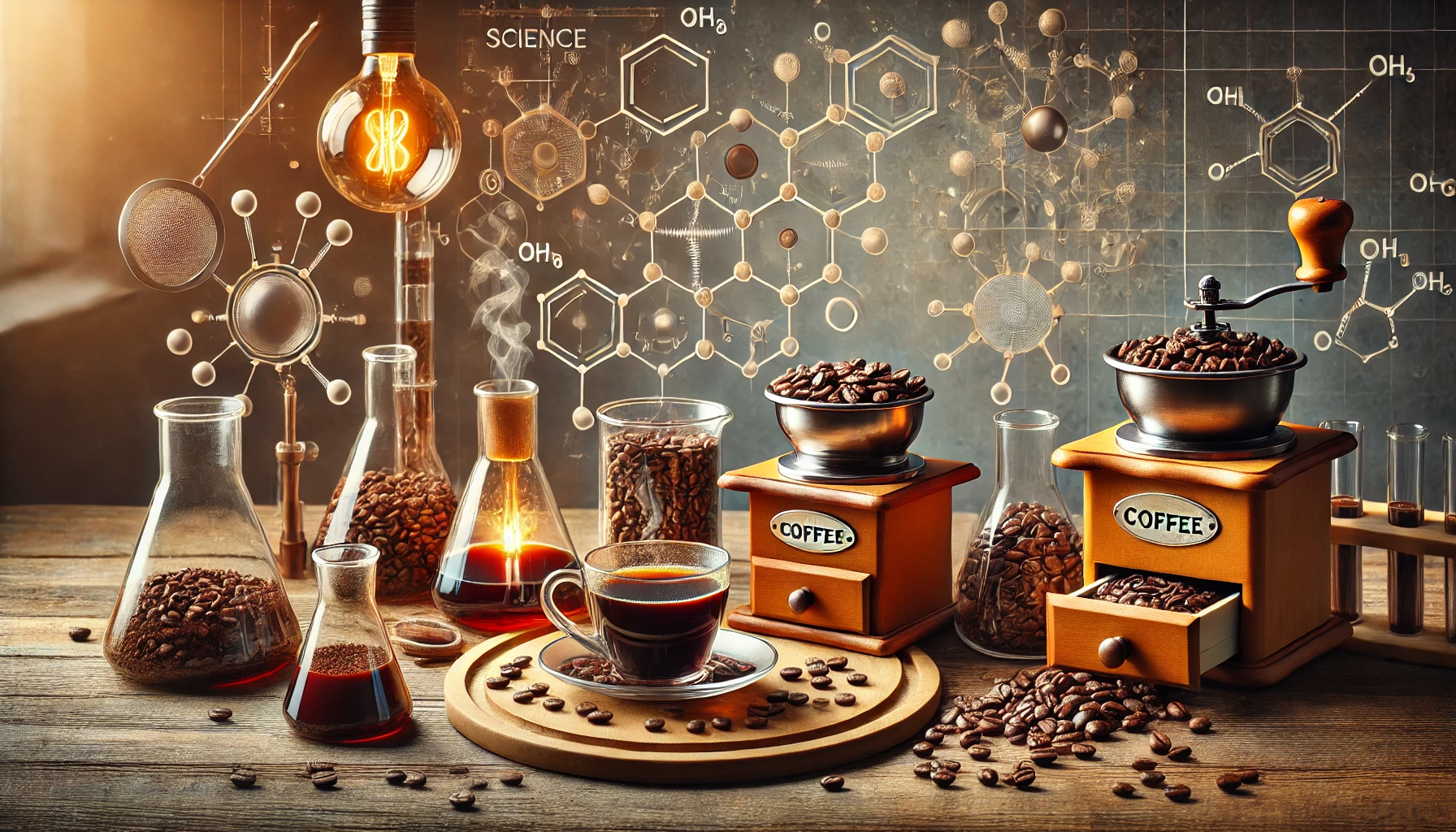
Coffee’s captivating aroma and flavor are the result of a complex interplay of chemistry. Understanding what happens during roasting and brewing can help you appreciate—and even enhance—your daily cup.
The Role of Compounds in Coffee
- Caffeine:
- Provides the bitterness and stimulating effect.
- Acts as a natural defense mechanism for the coffee plant.
- Chlorogenic Acids:
- Responsible for coffee’s acidity and antioxidant properties.
- Decrease during roasting, altering the coffee’s flavor profile.
- Lipids and Oils:
- Contribute to the mouthfeel and body of the coffee.
- Extracted more in espresso and French press methods.
- Sugars:
- Naturally present in coffee beans and caramelize during roasting.
- Add sweetness and complexity to the flavor.
The Science of Roasting
Roasting transforms raw coffee beans into the aromatic, flavorful beans we brew. Key chemical reactions include:
- Maillard Reaction:
- Proteins and sugars in the bean react to produce complex flavors.
- Responsible for nutty, toasty, and caramelized notes.
- Caramelization:
- Sugars break down into simpler molecules, contributing to sweetness.
- Pyrolysis:
- At higher temperatures, oils are released, and darker roasts develop smoky flavors.
Brewing and Flavor Extraction
- Temperature: Water between 195°F and 205°F (90°C to 96°C) ensures optimal extraction.
- Time: Longer brewing extracts deeper flavors, but too much time can lead to bitterness.
- Grind Size: Affects the surface area exposed to water, influencing the balance of flavors.
Common Flavor Profiles
- Fruity: Result of higher acidity, common in African coffees.
- Nutty: Associated with medium roasts, balancing sweetness and bitterness.
- Chocolaty: Found in beans from regions like Brazil, enhanced by caramelization.
How to Enhance Your Coffee’s Flavor
- Grind Fresh: Use a burr grinder for consistent particle size.
- Experiment with Water: Filtered water improves taste and prevents unwanted flavors.
- Adjust Ratios: Tailor the coffee-to-water ratio to your preference.
- Store Properly: Keep beans in an airtight container away from light and heat.
Final Thoughts
Coffee is a symphony of chemical reactions that create its signature aroma and taste. By understanding its chemistry, you can unlock new dimensions of flavor and make your coffee experience even more enjoyable.
Deixe um comentário